
return to peta.org
Home Animal Testing 101 Campaigns and Investigations Cruelty-Free Living Features Get Active Donate Now
Search
 
Point Counterpoint
Animals Used for Testing
U.S. Government Testing Programs
International Testing Programs
Companion-Animal Food Companies
Consumer Product Companies
Environmental Organizations
Animals Used for Education
Animals Used for Research
Animal Research Industry
Colleges/Universities
Health Charities
Resources
Action Alerts
Ads/PSAs
Become a PETA Member
Charities That Do/Don't Test on Animals
Companies That Do/Don't Test on Animals
Factsheets
Features
Join the Activist Network
Literature
News Releases
Photos
Victories
Videos
Blow the Whistle on Cruelty
Join Animal Savings Club!
Subscribe to E-News
Work for PETA
Whiplash™ for Playstation 2
Battle Evil Animal Testers
With Whiplash™ for Playstation 2

Help Make Nicotine Experiments on Animals Go 'Up in Smoke'


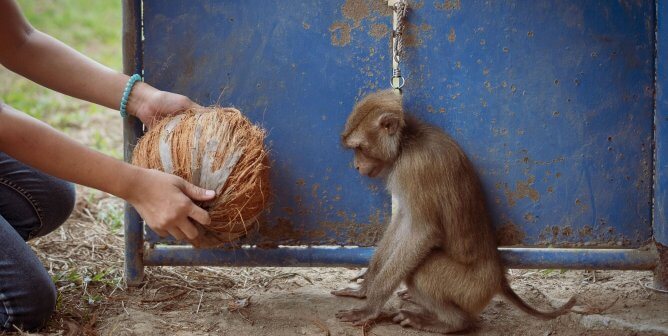
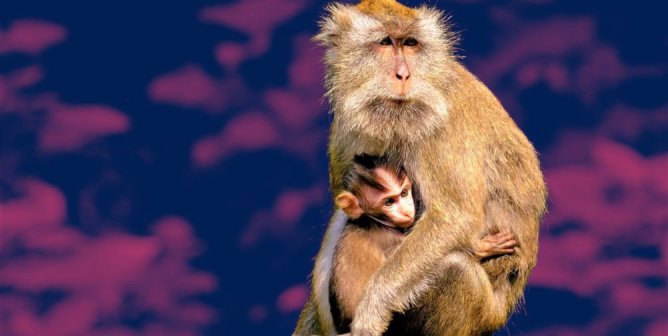
This pregnant monkey at ONPRC was injected with nicotine to induce birth defects in her fetuses' lungs.
The U.S. government continues to fund shockingly cruel, outdated, and inaccurate animal experiments to test the effects of nicotine—even though studies of humans conducted years ago showed that smoking cigarettes can cause disease in nearly every organ of the human body. Researchers have stated that the harm caused by smoking should be made through direct human experience, which can not be replicated by animal experiments. In fact, the results of smoking and nicotine experiments on animals are inconsistent and often at odds with outcomes in human smokers.

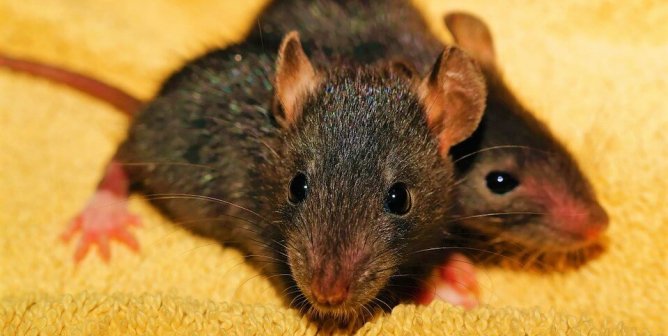
At Yale University, experimenter Marina Picciotto has received more than $15 million of taxpayer money since 1996 for experiments in which she forcibly exposes mice and rats to nicotine by injecting it into their abdomens, placing it directly into holes cut into their skulls, or forcing them to either drink water laced with the drug or die from dehydration. In some of her studies, Picciotto hangs mice by their tails from paper clips supposedly to see if exposure to nicotine affects anxiety and depressive behaviors. Another study by Picciotto and her colleagues involved administering up to 17 packs of cigarettes worth of nicotine per day to monkeys.

Eliot Spindel of the Oregon National Primate Research Center has used more than $7 million of U.S. taxpayer money since 1992 on experiments in which monkeys are impregnated and have intravenous catheters implanted into their bodies to deliver nicotine. The babies are delivered pre-term via Caesarian section, and the newborns are immediately taken from their mothers to have their lung function measured. Next, the babies are mutilated and killed so that their lungs can be removed—all before their second day of life. Spindel justifies his grisly experiments on animals by stating that he is hoping to discover how nicotine affects the lungs of fetuses.

We need your help!

Please contact officials at the National Institutes of Health and politely ask that the agency end its decades-long policy of funding nicotine experiments on animals and instead redirect tax money to prevention, education, and human-based research.

Take Action on This Issue

Subject:

Dear [ Decision Maker ],

(Edit Letter Below)

Sincerely,
[Your name]
By signing up here and giving us your details, we're taking that as acknowledgment that you've read and agreed to our privacy policy.
Send this message to:
  • Dr. Elias M. Zerhouni
  • Dr. Norka Ruiz Bravo
Complete the following to send this message. If you have participated before, just type in your email address then submit the form.

* Required Field

   |    E-Mail This Page    |    Subscribe to E-News    
About PETA    Privacy Policy    Disclaimer    PETA Web Sites   
Click here to return to PETA.org
Powered by image