return to peta.org
Home Animal Testing 101 Campaigns and Investigations Cruelty-Free Living Features Get Active Donate Now
Search
 
Point Counterpoint
Animals Used for Testing
U.S. Government Testing Programs
International Testing Programs
Companion-Animal Food Companies
Consumer Product Companies
Environmental Organizations
Animals Used for Education
Animals Used for Research
Animal Research Industry
Colleges/Universities
Health Charities
Resources
Action Alerts
Ads/PSAs
Become a PETA Member
Charities That Do/Don't Test on Animals
Companies That Do/Don't Test on Animals
Factsheets
Features
Join the Activist Network
Literature
News Releases
Photos
Victories
Videos
Blow the Whistle on Cruelty
Join Animal Savings Club!
Subscribe to E-News
Work for PETA
Whiplash™ for Playstation 2
Battle Evil Animal Testers
With Whiplash™ for Playstation 2

Tell Island Veterinary School to Stop Cutting Up and Killing Animals!

PETA has received shocking complaints and graphic photographs from students at Ross University School of Veterinary Medicine on the Caribbean island of St. Kitts who are being forced to perform multiple unnecessary surgeries on living animals, help the animals recover from the surgeries, and then kill them—even though many veterinary schools stopped this archaic, deadly practice long ago. Ross University students do not even have the option to do alternative projects if they do not want to harm animals they have cared for and grown to love—their refusal to mutilate and kill animals results in an automatic failing grade.

"It is unnecessary to harm or kill any healthy animals in order to train a veterinarian. This should be intuitively obvious by looking at the human medical field. Imagine training a physician to relieve the suffering caused by a fractured leg in a human being by taking healthy human beings and purposefully fracturing their legs. The analogy, and absurdity, is that simple."

—Dr. Nedim Buyukmihci, emeritus professor of veterinary medicine at the University of California, Davis

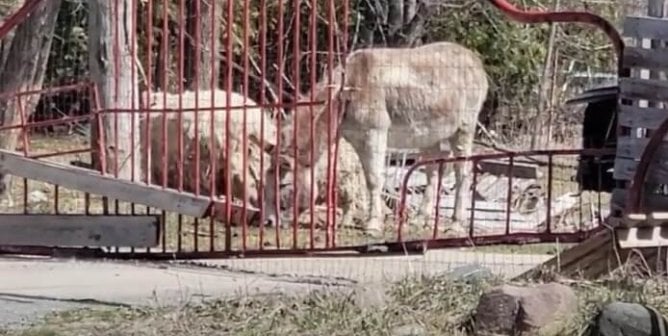
At Ross University, healthy dogs have their stomachs, intestines, and urinary bladders needlessly cut open. Sheep suffer from infected wounds caused by tissue removal and improperly sutured skin flaps. Donkeys have the nerves in their toes severed, their ligaments cut, a plastic tube inserted through their noses and into their stomachs, their abdomens surgically punctured, their tracheas (windpipes) cut, and fluid removed from their joints, after which they are killed so that students can practice amputating the animals' bones and drilling or scraping into the animals' skulls. 

Read PETA's official complaint to Ross University.

You Can Help
If you own at least $3,500 worth of stock in DeVry, Inc. (Ross University's parent company) and have owned the stock since July 1, 2007, please let us know.

Many other veterinary schools train their students without resorting to harmful teaching methods. In the United Kingdom, killing healthy animals for veterinary surgical training is illegal. The law in St. Kitts forbids "unnecessary suffering" of animals, yet at Ross University animals are suffering invasive procedures and being killed for no acceptable reason.

Please take action today to help the animals who are suffering at Ross University.

Personalized letters always work best. Feel free to use the following text, but your message will carry more weight if you write your own customized message and subject line.

Take Action on This Issue

Subject:

Dear [ Decision Maker ],

(Edit Letter Below)

Sincerely,
[Your name]
By signing up here and giving us your details, we're taking that as acknowledgment that you've read and agreed to our privacy policy.
Send this message to:
  • Daniel Hamburger
  • Dean David DeYoung
  • Mr. Erasmus Williams
  • Mr. Lloyd Lazar
  • Ms. Jihan Williams
  • President Thomas Shepherd
Complete the following to send this message. If you have participated before, just type in your email address then submit the form.

* Required Field

   |    E-Mail This Page    |    Subscribe to E-News    
About PETA    Privacy Policy    Disclaimer    PETA Web Sites   
Click here to return to PETA.org
Powered by image