

return to peta.org
Home Animal Testing 101 Campaigns and Investigations Cruelty-Free Living Features Get Active Donate Now
Search
 
Point Counterpoint
Animals Used for Testing
U.S. Government Testing Programs
International Testing Programs
Companion-Animal Food Companies
Consumer Product Companies
Environmental Organizations
Animals Used for Education
Animals Used for Research
Animal Research Industry
Colleges/Universities
Health Charities
Resources
Action Alerts
Ads/PSAs
Become a PETA Member
Charities That Do/Don't Test on Animals
Companies That Do/Don't Test on Animals
Factsheets
Features
Join the Activist Network
Literature
News Releases
Photos
Victories
Videos
Blow the Whistle on Cruelty
Join Animal Savings Club!
Subscribe to E-News
Work for PETA
Whiplash™ for Playstation 2
Battle Evil Animal Testers
With Whiplash™ for Playstation 2

Whistleblower Exposes Cruel Cat Experiments at UC Denver and Health Sciences Center

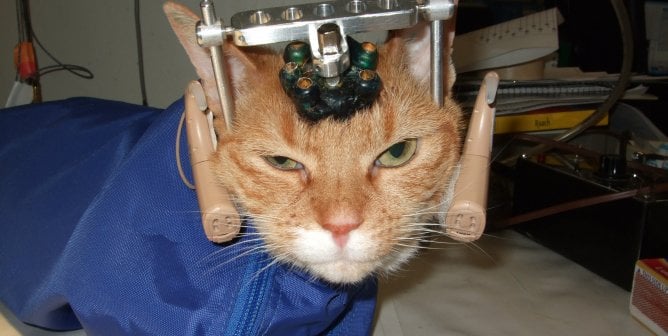
PETA was recently contacted by a whistleblower who worked at the University of Colorado Denver and Health Sciences Center. While working there, the whistleblower became aware of experiments conducted by Moshe Solomonow. Solomonow performs invasive surgical experiments that involve cutting open the backs of cats down to their spinal cords and attaching "S" hooks to their spinal ligaments. A machine then applies pressure in an effort to approximate what might happen if the cats were carrying heavy loads on their backs.

Please install Flash to view this content.

Get macromedia Flash Player

Other viewing options

The whistleblower told PETA that chloralose, the drug that the cats were being given as an anesthetic, did not appear to be effective and that the cats were still moving and struggling after the drug was administered. Based on his observations, the whistleblower was worried that the cats were still conscious and able to feel pain while the surgery was taking place.

"Chloralose is archaic and is absolutely contraindicated for use, particularly where animals will be subjected to surgery which would be expected to cause moderate or severe pain ... there could be no medical justification for using it."
—Ned Buyukmihci, V.M.D., veterinarian and Emeritus Professor of Veterinary Medicine, University of California

Solomonow's attempts to use four-legged animals to study back pain in humans are worthless. The physiological differences between cats' spines and humans' spines are significant, and we have ample scientific data based on human studies.

For more than 15 years, Solomonow has killed hundreds of cats in these and other worthless musculoskeletal experiments using taxpayer funds through federal research grants. The University of Colorado Denver and Health Sciences Center's animal care and use committee has failed miserably in its mission by approving useless and redundant experiments, inadequate drugs, and incorrect administration of these drugs.

"As a neurosurgeon focused on human spinal injuries, I can say that it makes no sense to use cats in studies designed to learn about human back issues. Dr. Solomonow's experiments are redundant and the applicability to humans is non-existent ... This work is already being done in human subjects and should not be conducted in animals."
—Marius Maxwell, M.D., Ph.D., neurosurgeon

PETA is calling for an immediate halt to Solomonow's experiments, the replacement of everyone on the university's animal care and use committee, and an investigation into the types and levels of anesthesia that are used on animals on University of Colorado Denver and Health Sciences Center campuses.

Please contact the UC Denver and Health Sciences Center's president and politely ask him to put a stop to these cruel and unnecessary experiments:

Tell me more
Take Action on This Issue

Subject:

Dear [ Decision Maker ],

(Edit Letter Below)

Sincerely,
[Your name]
By signing up here and giving us your details, we're taking that as acknowledgment that you've read and agreed to our privacy policy.
Send this message to:
  • Provost Mark Alan Heckler
Complete the following to send this message and sign-up to receive periodic updates. If you have participated before, just type in your email address then submit the form.

* Required Field

   |    E-Mail This Page    |    Subscribe to E-News    
About PETA    Privacy Policy    Disclaimer    PETA Web Sites   
Click here to return to PETA.org
Powered by image